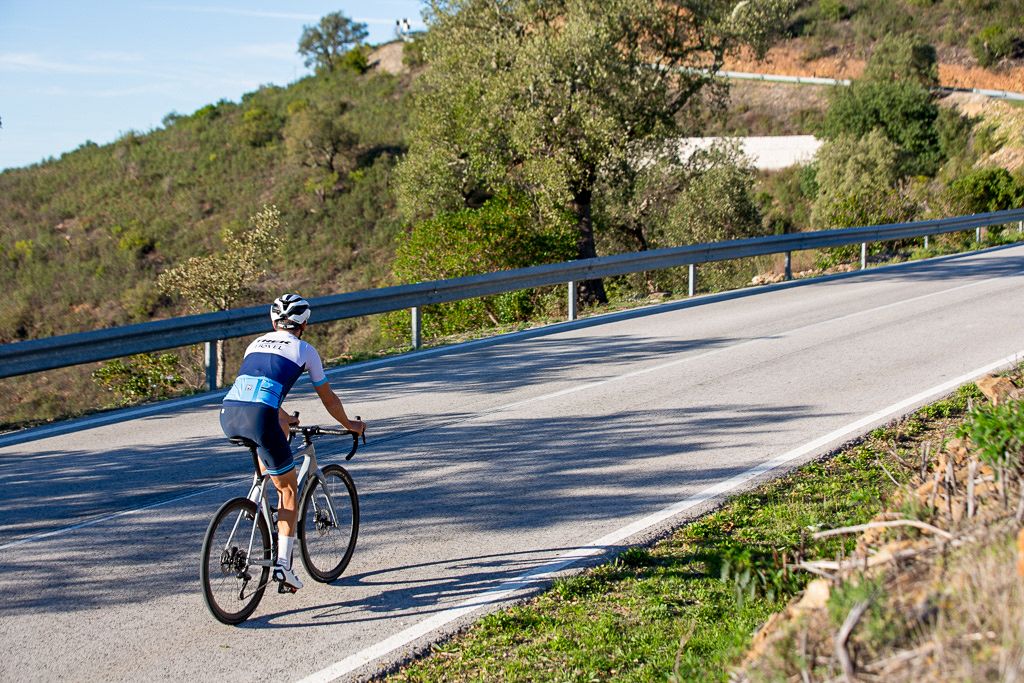
Both Trek Travel and DuVine are genuine cycling specialists. Both have been recognized by Travel + Leisure as World’s Best Tour Operators. Both attract serious cyclists and first-timers alike, offer luxury hotels and expert guides, and design trips around the idea that cycling is the best way to know a place. If you’re comparing them, you’re already narrowing your shortlist well. The differences between them are real and worth understanding — and they come down to philosophy, bike programs, group experience, and the specific things each company does that the other simply doesn’t offer.
Company background and founding philosophy
DuVine was founded in 1996 when Andy Levine cycled through Burgundy after college and designed the first tour for a pair of honeymooners who wanted to ride through vineyards and taste *du vin* — literally, some wine. That origin is still the DNA of every trip they run: bike, eat, drink, sleep. Culinary immersion and local connection are as central to DuVine’s identity as the riding itself. DuVine operates in over 50 destinations across Europe, North America, Latin America, Asia, and Africa, and has been recognized by Travel + Leisure seven times since 2017, including the number one spot in 2022 and 2024.
Trek Travel was founded in 2003 as a direct extension of Trek Bicycle — one of the world’s leading bike manufacturers. The founding philosophy is different: put the world’s best bikes and cycling expertise in service of the best possible cycling vacation. Where DuVine’s starting point is the table, Trek Travel’s starting point is the bike. That distinction shapes everything from the fleet you ride to the guides you travel with to the kind of trips each company builds. Trek Travel has been recognized by Travel + Leisure as a World’s Best Tour Operator in 2016, 2018, 2021, and 2025.
Both are excellent companies. What separates them is what they believe the cycling vacation is fundamentally *for*.
The bikes: brand heritage vs. multi-brand curation
DuVine uses bikes from multiple premium manufacturers, selected by destination and terrain. The standard European road fleet runs Cannondale Synapse Carbon with Shimano Ultegra Di2 electronic shifting. Level 4 Challenge tours include a Colnago V4 carbon road bike with Dura-Ace Di2 and Vision carbon wheels — the same platform Tadej Pogačar rode to Tour de France victories. E-bike options include a BMC Roadmachine AMP road e-bike (available at a $400 supplement on select trips) and a Specialized Turbo Vado hybrid e-bike. All bikes are included in the trip price; some upgrades carry a supplement.
Trek Travel guests ride Trek’s own production flagship models — the same bikes available through Trek’s global retail network.
Road trips: Trek Domane SL 7 Gen 4. carbon frame with IsoSpeed road-smoothing technology, Shimano Di2 electronic shifting, disc brakes. Trek Verve+ hybrid e-bike is also available on most Trek Travel Classic Bike Tours.
Gravel trips: Trek Checkpoint SL 7 AXS Gen 3, OCLV 500 carbon, SRAM Force XPLR AXS wireless drivetrain, 45mm tubeless tires
E-gravel option: Trek Checkpoint+ SL — quiet TQ motor, 360Wh battery, the same carbon platform as the standard Checkpoint
E-bike options are available on over 60 Trek Travel trips, including hybrid e-bikes for casual riders and the Checkpoint+ for guests who want electric assist on gravel routes. For a travel companion who doesn’t want to ride at all, non-rider options are available on most trips — there’s no requirement to be in the saddle every day.
The practical difference: DuVine curates the best available bike for each destination from across the industry. Trek Travel rides one brand, but that brand is the company’s parent — which means Trek Travel guides train specifically on Trek equipment, Trek mechanics support the fleet, and the bikes guests ride are backed by Trek’s full engineering and warranty infrastructure.
Neither approach is wrong. The DuVine model offers best-in-class variety; the Trek Travel model offers deep integration between the company and the bikes it provides.
Who these trips are built for
Trek Travel uses four defined rider types — Leisure, Recreational, Active, and Avid — and designs every trip to accommodate multiple levels simultaneously. A leisure rider and an avid rider on the same trip take different route options each day and arrive at the same lunch stop, the same hotel, the same dinner table. E-bikes are integrated across the program, not siloed into separate trip formats. Three-day and four-day getaway trips offer lower-commitment entry points for first-timers or travelers with limited time.
For non-cyclists joining a riding partner, Trek Travel offers non-rider options on most trips — van transport, cultural visits, and independent exploration — so companions don’t need to spend the week watching from the hotel.
Group size and guide model
DuVine’s scheduled departures never exceed 14 guests. That cap is a deliberate choice — DuVine’s itineraries often include access to small family restaurants, private wine cellars, and artisan producers where larger groups simply can’t go. The intimacy is the experience. DuVine guides are locals: they live in the region, speak the language natively, and bring personal relationships with winemakers, chefs, and hotel owners that open doors beyond the standard itinerary.
Trek Travel’s group sizes vary by trip format. Most classic and gravel trips are designed to accommodate a wider range of guests with guide and van support scaled accordingly. Trek Travel guides are expert cyclists and mechanics first — people who can manage a full day of riding support, handle mechanical issues in the field, and adapt routes based on weather, fitness, and preference. The guide expertise is cycling-specific and deep.
For travelers who want the smallest possible group and the deepest local immersion — the winemaker who greets you by name, the restaurant that doesn’t appear on any list — DuVine’s model is genuinely hard to match. For travelers who want comprehensive cycling support, route flexibility, and the full infrastructure of a company built around bikes, Trek Travel’s guide program delivers that at a high level.
Trip variety: cycling depth vs. activity breadth
Both companies offer trips across multiple continents for all fitness levels, from Level 1 leisure rides to Level 4 challenging ascents. The meaningful difference is in how deep each company goes within cycling.
Trek Travel’s catalog includes formats DuVine doesn’t offer:
Trek Travel’s catalog is built around cycling and its natural extensions:
Classic road bike tours — from Tuscany and Provence to Vermont and the San Juan Islands.
Gravel bike tours — Tuscany’s strade bianche, Girona’s dirt roads, Croatia’s vineyard tracks, Vermont’s covered bridges, Scotland’s Highlands.
Hiking & walking tours — Croatia, Ireland, Portugal, Dolomites, Costa Rica, Scotland, and mor.
Ride Camps — structured performance training in pro cycling destinations including Girona, Mallorca, Solvang, Portugal, and Greenville.
Self-guided trips — independent cycling in Tuscany, Provence, Portugal, Czech Republic, Ireland, and others.
Pro race trips — Tour de France, Tour de France Femmes (see below).
Short-format getaways — 3 and 4-day trips in Asheville, Santa Barbara, Vermont, Zion, and more.
Pro race access: an exclusive Trek Travel advantage
This is the sharpest distinction between the two companies, and it has no DuVine equivalent.
Trek Travel is the Official Tour Operator of the Tour de France and the exclusive hospitality partner of Team Lidl-Trek. Trek Travel guests ride Tour de France mountain stages — Alpe d’Huez, the Col du Tourmalet, the Col de la Madeleine — on the same roads, on the same day, hours before the professional peloton arrives. VIP race access passes provide entry to finish-line hospitality areas. Ultimate Experience trips include behind-the-scenes access to the Lidl-Trek team: a Q&A cocktail hour with team representatives, a tour of the team bus, and access to the team paddock at the Grand Départ. Trek Travel also offers Tour de France Femmes trips with the same level of VIP access and course riding.
No other guided cycling tour operator holds official Tour de France status or an exclusive pro team partnership at this level. It is a direct result of Trek Travel’s position at the intersection of the professional cycling industry and travel — a connection that DuVine, for all its strengths, cannot replicate.
Sustainability
DuVine became the first 100% carbon-neutral bike tour operator in 2022 — a genuine commitment and a meaningful credential in the active travel industry.
Trek Travel publishes an annual Greenhouse Gas Emissions Inventory and has set measurable reduction targets: 5% annual reduction in Scope 1 and 2 emissions, and 6% annual reduction in Scope 3 emissions per guest per day, relative to a 2023 baseline. Trek Travel’s 2025 progress report documents performance against those targets transparently.
Both companies take sustainability seriously. DuVine holds the carbon-neutral certification; Trek Travel is working toward measurable year-on-year reduction with publicly reported data.
Which company is right for you
Choose DuVine if: Culinary immersion is as important to you as the riding — you want wine poured at every meal, local guides who grew up in the region and know the winemaker personally, a group small enough to fit in a family kitchen, and a philosophy where food and culture are as central as the cycling. The Cycle + Sail format is also genuinely unique.
Choose Trek Travel if: The bike and the ride are the reason you’re traveling — and you want the equipment, support, and expertise that come from a company built inside the cycling industry. Whether you’re a first-timer on an e-bike, a recreational rider heading to Tuscany, a gravel enthusiast exploring Croatia’s vineyard tracks, or a cyclist who wants to ride Alpe d’Huez the morning the Tour de France climbs it, Trek Travel’s organization is built specifically for that experience. The pro race program, Ride Camp format, gravel-specific fleet, and self-guided options represent a depth of cycling infrastructure that DuVine’s culinary-forward model doesn’t prioritize in the same way.
Both are among the best cycling tour companies in the world. The right choice comes down to whether you’re planning a cycling trip with great food, or a food and wine trip that happens to be on bikes.
Explore Trek Travel trips — or talk to a trip consultant to find the right fit for your pace, your goals, and the kind of cycling vacation you actually want.
Frequently Asked Questions
What is the main difference between Trek Travel and DuVine?
Both Trek Travel and DuVine are luxury cycling specialists recognized by Travel + Leisure. The core difference is philosophy. DuVine was founded in 1996 around culinary immersion — wine at every meal, local guides who live in the region, groups capped at 14 guests, and a philosophy where food and culture are as central as the riding. Trek Travel was founded in 2003 by Trek Bicycle with the bike as the organizing principle — Trek flagship production bikes, certified mechanic guides, Tour de France exclusive access, and a catalog that goes deeper into cycling formats than any other operator. Both are excellent; the right choice depends on whether culinary immersion or cycling infrastructure is the priority.
How big are DuVine groups compared to Trek Travel?
DuVine’s scheduled departures never exceed 14 guests — a deliberate cap designed to access small family restaurants, private wine cellars, and artisan producers where larger groups can’t go. Trek Travel group sizes vary by trip format, with guide and van support scaled accordingly. For travelers who want the smallest possible group and the deepest local immersion, DuVine’s 14-guest cap is a genuine differentiator.
Which company is more sustainable — Trek Travel or DuVine?
DuVine became the first 100% carbon-neutral bike tour operator in 2022 — a certified and meaningful credential in the active travel industry. Trek Travel publishes an annual Greenhouse Gas Emissions Inventory and has set measurable reduction targets: a 5% annual reduction in Scope 1 and 2 emissions and a 6% annual reduction in Scope 3 emissions per guest per day, relative to a 2023 baseline, with progress reported transparently each year. Both companies take sustainability seriously; DuVine holds the carbon-neutral certification, Trek Travel is pursuing measurable year-on-year reduction with publicly reported data.
Does Trek Travel offer gravel cycling trips that DuVine doesn't?
Yes. Trek Travel operates a dedicated gravel program with a purpose-built 2026 fleet — the Trek Checkpoint SL 7 AXS Gen 3 and Checkpoint+ SL e-gravel bike — across specific gravel itineraries in Tuscany, Croatia, the Swiss Alps, Scotland, Vermont, South Dakota, and others. DuVine offers rides on unpaved terrain in select destinations but does not operate a dedicated gravel program with a purpose-built gravel fleet.
Who is the official Tour de France tour operator?
Trek Travel is the Official Tour Operator of the Tour de France and the exclusive hospitality partner of Team Lidl-Trek. Trek Travel guests ride Tour de France mountain stages on race day, hours before the professional peloton, with VIP hospitality and behind-the-scenes Lidl-Trek team access on Ultimate Experience trips. Trek Travel also holds equivalent official status for the Tour de France Femmes. DuVine does not hold official Tour de France status or an equivalent pro race program.


